
There are few property markets in Europe where geography exerts such an overwhelming influence on value as Malta. A small archipelago in the central Mediterranean, positioned strategically between Europe and North Africa, Malta has transformed itself from a quiet island economy into one of the continent’s most resilient and internationally connected real estate markets.
The country’s appeal is multilayered. It is part financial hub, part lifestyle destination and part strategic residence jurisdiction for internationally mobile professionals. For property buyers, Malta offers something increasingly rare in Europe: political stability, English-speaking administration, eurozone security and year-round demand compressed into a tightly constrained land mass.
This is not a market driven purely by tourism or speculative enthusiasm. Instead, Malta’s property sector has evolved into a mature investment environment supported by foreign direct investment, population growth, financial services, digital industries and sustained international interest. Prices are no longer “cheap” by Mediterranean standards, yet demand continues to outstrip supply in many parts of the islands.
For international buyers seeking a foothold within the Schengen area, Malta occupies a distinctive position. It is simultaneously a lifestyle acquisition, an investment proposition and, for some, a strategic residency decision. That combination continues to support the market even during periods of broader European economic uncertainty.
A Small Nation with Outsized Economic Influence
Malta’s economy has changed dramatically over the past two decades. Once heavily dependent on shipping and tourism, it has diversified into finance, online gaming, technology, aviation services and digital enterprise. This transformation has had profound consequences for the housing market.
The country consistently attracts international workers, entrepreneurs and investors. Its corporate tax structures, EU membership and business-friendly environment have encouraged multinational firms and wealthy individuals to establish a presence on the islands. Population growth, particularly among expatriates, has increased pressure on housing supply and contributed to long-term upward momentum in property prices.
Unlike larger European nations where economic performance varies significantly between regions, Malta’s compact geography means that prosperity tends to feed directly into national housing demand. Even during periods of slower transaction activity, the market has demonstrated remarkable resilience.
The broader European backdrop has inevitably affected Malta. Higher interest rates across the eurozone have moderated some buyer activity, particularly among highly leveraged purchasers. Yet the islands have avoided the sharp corrections witnessed in parts of mainland Europe. Limited land availability continues to underpin valuations, acting as a natural constraint against oversupply.
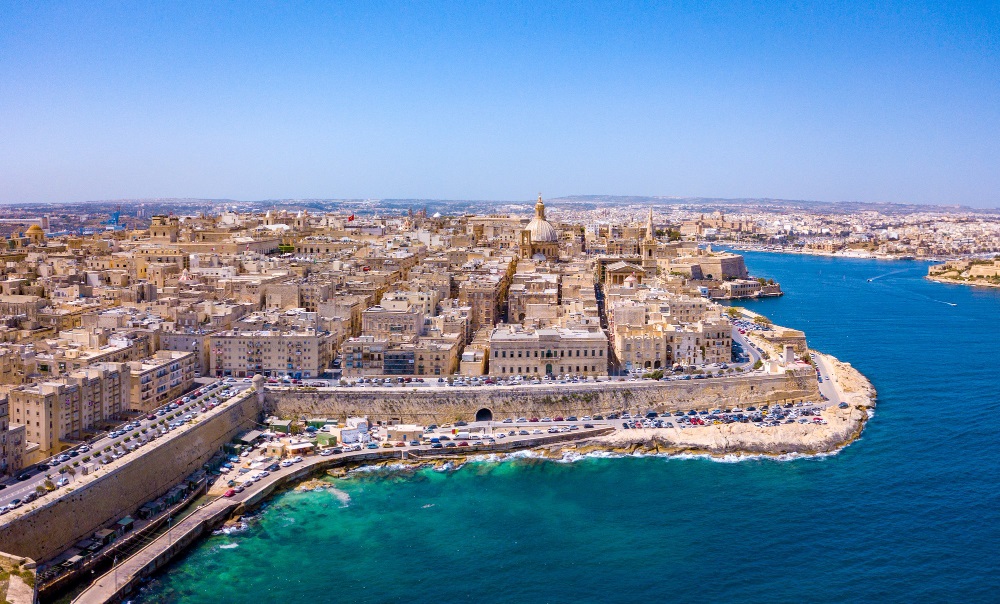
Valletta and the Northern Harbour Region
The centre of gravity in Malta’s property market lies within and around Valletta and the Northern Harbour region. Here, centuries-old limestone architecture sits alongside luxury apartment developments, marinas and international business districts.
Areas such as Sliema, St Julian’s and Gżira have become synonymous with Malta’s modern property boom. These districts combine proximity to business centres with waterfront living, restaurants, nightlife and international schools. Demand from foreign buyers remains particularly strong in these areas.
Property prices reflect this popularity. Premium seafront apartments in Sliema and St Julian’s frequently exceed €7,000 to €10,000 per square metre, while ultra-prime developments can command considerably higher figures. Inland apartments remain more accessible, though prices across the region have risen steadily over recent years.
Valletta itself offers a different proposition. The historic capital, with its UNESCO World Heritage status, attracts buyers seeking restored townhouses and heritage properties. Renovation costs can be significant, but demand for character properties remains strong, particularly among international purchasers seeking unique Mediterranean homes.
The Northern Harbour area also remains the centre of Malta’s rental market. Demand from expatriate professionals, financial sector employees and digital workers supports high occupancy rates throughout much of the year.
Gozo: A Different Pace of Market
Across the channel, Gozo presents an altogether different dynamic. Malta’s sister island is quieter, greener and more rural, attracting buyers seeking lifestyle rather than urban intensity.
Property prices in Gozo are generally lower than in Malta proper, though the gap has narrowed as international interest has increased. Farmhouses, converted character homes and sea-view apartments remain popular among overseas buyers.
Gozo’s market is more seasonal and less liquid than Malta’s main urban centres, yet it benefits from strong appeal among retirees and second-home purchasers. Infrastructure improvements and better transport connections have enhanced accessibility, increasing its attractiveness as a long-term residential option rather than merely a holiday destination.
While rental yields in Gozo are typically lower outside tourist hotspots, the island offers stronger lifestyle appeal and lower acquisition costs. For buyers prioritising tranquillity and long-term enjoyment, it represents a compelling alternative.
Supply Constraints Continue to Define the Market
Scarcity remains Malta’s defining property characteristic. The islands are densely populated, development land is limited and planning regulations have become increasingly scrutinised amid concerns over overdevelopment.
Construction activity remains visible across much of the country, yet supply often struggles to keep pace with demand in desirable locations. This imbalance continues to support property values even during slower economic periods.
Developers have increasingly shifted towards high-specification apartment schemes aimed at affluent international buyers. Energy efficiency, modern amenities and mixed-use concepts have become more prominent in new developments, reflecting changing buyer expectations.
At the same time, concerns about overbuilding and environmental pressure have entered the national conversation. Questions surrounding infrastructure capacity, traffic congestion and sustainability are becoming increasingly important factors in buyer decision-making.
For investors, this creates a nuanced landscape. Prime areas continue to benefit from scarcity and international demand, while less desirable overdeveloped districts may face more competitive pricing conditions.
The Role of Foreign Buyers
Foreign purchasers play a significant role in Malta’s property market. Buyers from across Europe, the Middle East and increasingly North America continue to view Malta as an attractive jurisdiction for both investment and lifestyle purposes.
EU citizens generally face relatively straightforward purchasing procedures, while non-EU buyers may require acquisition permits depending on the type and location of the property. Malta also maintains designated Special Designated Areas where foreigners can purchase property with fewer restrictions.
The country’s residency and investment migration frameworks have historically contributed to demand in the premium property sector. Although regulatory scrutiny around citizenship and residency programmes has intensified at European level, Malta continues to attract internationally mobile wealth.
English as an official language remains a major advantage. Legal documentation, contracts and administrative procedures are accessible to international buyers in a way that many southern European markets are not.
Property Prices and Market Segmentation
Malta’s property market is increasingly segmented between luxury developments, mid-market apartments and traditional housing stock.
Luxury waterfront schemes remain among the strongest performing sectors. Developments around Portomaso, Tigné Point and the Three Cities continue to attract affluent international buyers seeking secure, low-maintenance residences with premium amenities.
Mid-market apartments dominate transaction volumes. Prices vary widely depending on location, age and finish, though many urban apartments now range between €250,000 and €600,000.
Traditional Maltese townhouses and houses of character occupy a niche but highly desirable segment. These properties often require renovation, particularly in historic villages, but their scarcity supports long-term value.
The overall market has experienced slower price growth recently compared with the rapid increases seen in previous years. Nevertheless, values have remained broadly resilient, particularly in prime coastal districts where international demand remains robust.
Rental Yields and Investor Returns
Malta’s rental sector remains one of the strongest in southern Europe. The combination of expatriate employment, tourism and limited housing supply has historically supported healthy rental yields.
Long-term rental demand is particularly strong in areas close to business hubs. One-bedroom apartments in Sliema or St Julian’s commonly achieve monthly rents between €1,200 and €2,000 depending on specification and location. Luxury waterfront properties can command substantially higher rents.
Gross rental yields typically range between 4% and 6%, though returns vary considerably by property type and financing structure. Short-term holiday rentals can produce stronger returns in peak tourist seasons, though regulatory oversight has increased.
Investors must also account for taxation, maintenance costs and management fees. Malta’s climate accelerates wear on coastal properties, making ongoing maintenance an important consideration for long-term ownership.
Transaction Costs and Taxation
Purchasing property in Malta involves relatively transparent procedures, though costs can be significant.
Stamp duty is generally charged at 5% of the purchase price, although exemptions and reduced rates may apply in certain circumstances. Notary fees usually range between 1% and 3%, while legal and administrative costs add further expenses.
Annual property taxes are comparatively modest relative to many European jurisdictions. However, capital gains tax and taxation on rental income must be carefully considered, particularly for non-resident owners.
Financing remains available through Maltese banks, though lending criteria have tightened in line with broader European conditions. Foreign buyers may face larger deposit requirements and more detailed due diligence procedures.
Tourism and Lifestyle Demand
Tourism remains a powerful influence on Malta’s property market. The islands attract millions of visitors annually, supporting demand for holiday lets, hospitality-linked developments and second homes.
Yet Malta’s appeal extends beyond tourism. The climate, healthcare system, safety and English-speaking environment make it particularly attractive for retirees and remote workers seeking permanent or semi-permanent relocation.
The Mediterranean lifestyle continues to underpin international demand. Buyers are often motivated as much by lifestyle considerations as by pure financial return. This emotional component provides a degree of resilience that purely investment-driven markets sometimes lack.
Risks and Challenges
Despite its strengths, Malta’s property market is not without risks.
Affordability pressures have become a growing domestic concern, particularly for younger Maltese buyers. Rapid price growth over the past decade has widened the gap between incomes and housing costs.
Infrastructure strain is another issue. Traffic congestion, construction density and environmental concerns have generated debate over the long-term sustainability of continued rapid development.
Interest rates remain an important variable. Higher borrowing costs have cooled parts of the market and could continue to influence transaction volumes. However, the structural shortage of housing supply continues to support overall valuations.
Regulatory scrutiny at EU level regarding residency and citizenship frameworks may also influence certain premium segments of the market. Nevertheless, Malta’s broader economic fundamentals remain comparatively strong.
The Outlook for Malta Property
The Maltese property market appears to be entering a more mature phase. The era of explosive annual price growth may be moderating, but the fundamental drivers of demand remain firmly intact.
Limited land supply, strong international demand and economic diversification continue to provide long-term support. While transaction activity may fluctuate in response to financing conditions, prime locations are likely to retain their appeal.
For international investors, Malta offers something increasingly unusual within Europe: a stable eurozone jurisdiction with English-speaking administration, high liquidity in prime areas and enduring global appeal.
The market is no longer inexpensive, nor is it a hidden opportunity waiting to be discovered. Malta has already arrived on the international property stage. Yet its unique combination of scarcity, stability and Mediterranean lifestyle ensures that demand continues to endure.
Conclusion: A Market Built on Geography and Globalisation
Malta’s property story is ultimately one of geography meeting globalisation. A small island nation with finite land has opened itself to international business, wealth and mobility, creating sustained pressure on housing stock.
For buyers, the attraction lies in more than just climate or coastline. Malta offers access to the European Union, a transparent legal framework, economic resilience and a lifestyle that remains highly desirable.
As global property markets become increasingly uncertain, Malta’s greatest strength may be its simplicity: limited supply in a location that international buyers continue to value highly.
That dynamic has shaped the market for years. There is little evidence that it is about to change.
Financial Disclaimer: The information provided in this article is for general informational purposes only and does not constitute financial advice. While every effort has been made to ensure the accuracy of the content, market conditions may change, and unforeseen risks may arise. The author and publisher of this article do not accept liability for any losses or damages arising directly or indirectly from the use of the information contained herein.
Copyright: schengenproperty.com
Pictures by: www.magnific.com/