
There are property markets that entice with affordability, and there are those that command attention through scarcity and resilience. Luxembourg sits firmly in the latter category. Small in size but formidable in economic stature, this Grand Duchy has built a real estate market that reflects its status as one of Europe’s wealthiest and most internationally connected nations.
For global investors, Luxembourg is not a speculative play. It is a strategic allocation—one rooted in capital preservation, long-term appreciation and exposure to a uniquely stable European economy. Property here is expensive by almost any measure, but that expense is underpinned by fundamentals that remain difficult to replicate elsewhere on the continent.
An Economy of Scale Disproportionate to Its Geography
Luxembourg’s economic narrative is well rehearsed but still striking. With a population of just over 650,000, it has cultivated an outsized role in global finance. The country is home to one of the world’s largest investment fund industries and serves as a European base for multinational corporations, banks and EU institutions.
This concentration of high-value activity has direct implications for the property market. Income levels are among the highest in Europe, and employment remains robust. Even amid broader European economic headwinds, Luxembourg’s labour market has shown resilience, supported by cross-border commuting from neighbouring France, Belgium and Germany.
The result is sustained demand for housing that consistently outpaces supply. Unlike larger countries where regional disparities can dilute national trends, Luxembourg’s compact geography means that economic strength translates almost uniformly into property demand.
A Market Defined by Limited Supply
If one factor explains Luxembourg’s property dynamics, it is supply—or rather, the lack of it. The country’s small land area, combined with strict planning regulations and a desire to preserve environmental and urban integrity, has constrained new development.
This structural shortage has driven property prices to levels that place Luxembourg among the most expensive markets in Europe. Average residential prices often exceed €8,000 to €10,000 per square metre nationwide, with prime locations in Luxembourg City frequently surpassing €12,000 per square metre.
Even in a period where higher interest rates have moderated activity across Europe, Luxembourg’s market has shown only limited price correction. Instead, the adjustment has largely taken the form of reduced transaction volumes and longer selling periods, rather than significant downward pressure on valuations.
This is a crucial distinction. It reflects a market where owners are not compelled to sell and where underlying demand remains intact.
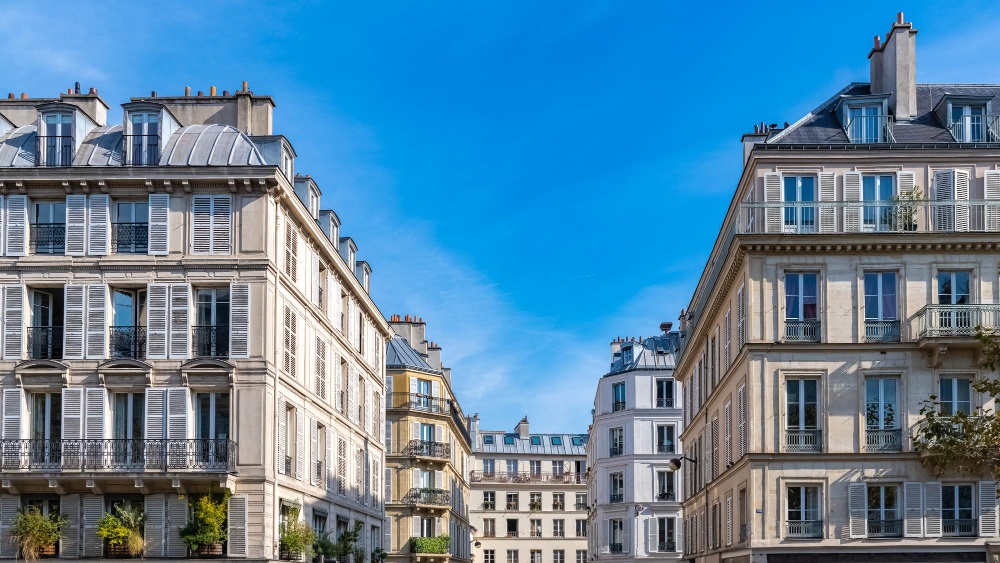
Luxembourg City: The Beating Heart of the Market
At the centre of this landscape is Luxembourg City, the capital and economic nucleus of the country. Here, the interplay between finance, governance and international business creates a property market that is both dynamic and intensely competitive.
Neighbourhoods such as Kirchberg, home to European institutions and financial firms, and Limpertsberg, known for its residential appeal, command premium prices. The historic centre, with its UNESCO-listed fortifications, offers limited but highly sought-after housing stock.
Demand is driven not only by domestic buyers but also by expatriates and international professionals. Luxembourg City’s cosmopolitan population—nearly half of whom are foreign nationals—ensures a steady need for high-quality housing.
Rental prices reflect this demand. A one-bedroom apartment in central areas can command monthly rents between €1,500 and €2,500, while larger properties often exceed €3,500. Yields, however, tend to be lower than in less expensive markets, typically ranging from 2% to 4%. For many investors, the trade-off is clear: lower income returns in exchange for capital security.
Beyond the Capital: Emerging Value in Secondary Locations
While Luxembourg City dominates, other regions offer relatively more accessible entry points. Areas such as Esch-sur-Alzette, Differdange and the northern communes have seen increased interest as buyers seek affordability within commuting distance of the capital.
Esch-sur-Alzette, in particular, has benefited from regeneration initiatives and its role as a cultural hub. Property prices here are lower than in the capital, often ranging from €5,000 to €7,000 per square metre, though the gap has narrowed as demand has intensified.
Cross-border living is another defining feature of Luxembourg’s housing landscape. Many workers choose to reside in neighbouring countries where property is more affordable, commuting daily into Luxembourg. This dynamic has implications for domestic demand, but it has not alleviated the pressure on the country’s own housing supply.
Financing Conditions and Market Adjustment
Like much of Europe, Luxembourg has experienced a shift in financing conditions. Interest rates have risen from historic lows, impacting borrowing capacity and moderating buyer activity. Mortgage approvals have slowed, and buyers have become more cautious.
However, Luxembourg’s high income levels and conservative lending practices have mitigated the risk of widespread distress. Loan-to-value ratios are typically prudent, and the banking sector remains robust.
Rather than triggering a sharp downturn, these conditions have led to a period of consolidation. Sellers have adjusted expectations, and buyers have gained slightly more negotiating power, though the balance remains tilted towards the former.
For international investors, financing may be more complex. Non-resident buyers often face stricter criteria and may be required to provide higher deposits. Nonetheless, the availability of euro-denominated mortgages and the stability of the financial system remain attractive.
Transaction Costs and Legal Framework
Luxembourg’s property market benefits from a transparent and well-regulated legal framework. Transactions are conducted through notaries, ensuring that title transfer and documentation are handled with precision.
Buyers should budget for transaction costs of approximately 7% to 10% of the purchase price. This includes registration duties, notary fees and administrative charges. In certain cases, tax credits or exemptions may apply, particularly for primary residences, though these are subject to specific conditions.
Property taxes themselves are relatively low compared with other European countries, which partially offsets the high acquisition costs. However, ongoing costs such as maintenance, insurance and service charges should not be overlooked, particularly in multi-unit developments.
Rental Market: Strong Demand, Modest Yields
Luxembourg’s rental market is characterised by persistent demand and limited supply. The country’s large expatriate population, combined with high property prices that place ownership beyond the reach of many, ensures a steady pool of tenants.
Rental growth has been steady, though it has moderated in line with broader market conditions. Regulations governing rent increases and tenant protections are relatively balanced, providing a degree of stability for both landlords and tenants.
For investors, the key challenge is yield compression. High purchase prices mean that rental returns are modest by international standards. However, vacancy rates are low, and rental income is generally reliable.
Short-term rentals are less prominent than in tourist-heavy markets, though they exist in niche segments. Long-term leasing remains the dominant model, particularly in urban areas.
Demographics and Structural Demand
Luxembourg’s demographic profile is a critical driver of its property market. Population growth has been strong, fueled by immigration and the country’s role as an employment hub.
This growth is expected to continue, placing further pressure on housing supply. Government initiatives aimed at increasing construction have had some impact, but they have yet to fully address the structural imbalance.
The country’s high quality of life, political stability and central location within Europe make it an attractive destination for professionals and families alike. These factors underpin long-term demand for housing, even in the face of economic fluctuations.
Risks in a High-Value Market
No market is without risk, and Luxembourg’s is no exception. The most obvious concern is affordability. High prices can limit market accessibility and create barriers to entry, particularly for younger buyers.
Interest rate movements remain a key variable. While the market has shown resilience, sustained higher borrowing costs could exert further pressure on demand. However, the extent of any impact is likely to be moderated by the country’s strong income levels.
Another consideration is liquidity. In a high-value market, transaction volumes can be sensitive to shifts in sentiment. Periods of reduced activity may make it more challenging to enter or exit positions quickly.
Yet these risks are counterbalanced by the market’s underlying strengths. Luxembourg’s economic stability, regulatory framework and international appeal provide a solid foundation that few markets can match.
The Investment Case: Preservation Over Speculation
Luxembourg is not a market for those seeking rapid gains. It is, instead, a market for those who value capital preservation and long-term stability.
Price growth has historically been steady rather than explosive, reflecting the interplay between limited supply and sustained demand. Even in periods of economic uncertainty, the market has demonstrated an ability to absorb shocks without significant disruption.
For institutional investors, Luxembourg offers a secure environment aligned with broader European standards. For private buyers, it provides access to a market that combines exclusivity with resilience.
A European Stronghold in a Changing Landscape
In a Europe where property markets are increasingly shaped by volatility, Luxembourg stands apart. Its combination of economic strength, demographic growth and constrained supply creates a market that is both distinctive and durable.
For international buyers, the appeal lies not only in the numbers but in the narrative. Luxembourg represents a convergence of stability and opportunity—a place where property is as much about safeguarding wealth as it is about generating returns.
Conclusion: Scarcity as Strength
Luxembourg’s property market is, at its core, a study in scarcity. Limited land, controlled development and sustained demand have combined to create one of Europe’s most robust real estate environments.
It is not a market that offers easy entry or quick rewards. But for those with the resources and the perspective to engage with it, Luxembourg provides something increasingly rare: certainty.
In a world of shifting economic tides, that certainty carries its own premium—and in Luxembourg, it is a premium that buyers continue to pay.
Financial Disclaimer: The information provided in this article is for general informational purposes only and does not constitute financial advice. While every effort has been made to ensure the accuracy of the content, market conditions may change, and unforeseen risks may arise. The author and publisher of this article do not accept liability for any losses or damages arising directly or indirectly from the use of the information contained herein.
Copyright: schengenproperty.com
Pictures by: www.magnific.com/